Foam Roller
Recover Faster, Move Better and Stay Injury-Free
Would you like to move around more freely? Ever felt muscle tightness after a workout that stretching just doesn't quite reach? Have you had a muscle knot that no amount of stretching seems to shift?
A foam roller is the answer to all three. It's one of the most practical and underused recovery tools available and it belongs in every home gym.
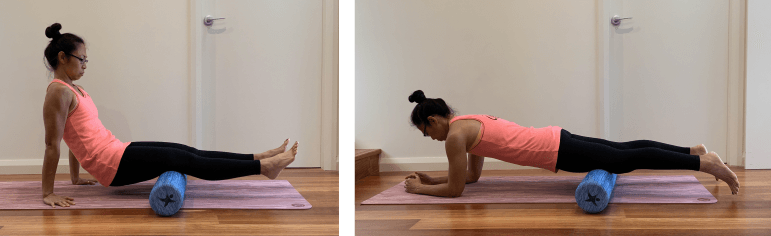
What does a foam roller actually do?
Using a foam roller is technically called self-myofascial release. It's a form of self-massage used to address muscle tightness and knots, also known as trigger points. By applying pressure to specific areas using your bodyweight and the roller, you release tension in the fascia, the thin layer of connective tissue that surrounds your muscles.
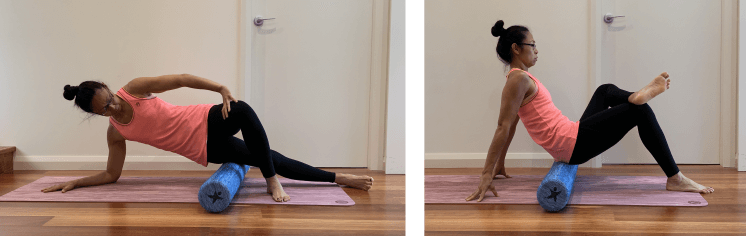
Fascia can become tight through exercise, lack of movement, overuse, injury or poor posture. When it does, blood flow is restricted, and restricted blood flow leads to tightness and pain. Self-myofascial release restores blood flow, relaxes the fascia and allows the muscle to move freely again.
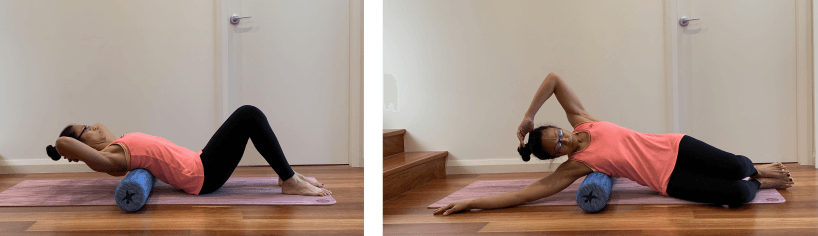
I often use a foam roller before and after most workouts, spending two to five minutes on areas that feel tight or need mobilising. Around 20 to 60 seconds per area is generally sufficient before moving on.
When to use a foam roller
- Before a workout: to improve range of motion and prepare specific areas for training
- As part of your warm-up: combined with dynamic movements to raise tissue temperature and improve movement quality
- After a workout: to relax tight muscles, reduce soreness and support recovery
- Any time: to address chronic tightness, reduce tension from sitting or prevent muscular problems from developing
The three main foam rolling techniques
Rolling
Roll back and forth slowly over a muscle group a few inches at a time. When you find a tender spot, pause for several seconds on that area. Apply only as much pressure as you can manage comfortably. If an area is too painful to roll directly, work around the edges and approach it gradually.
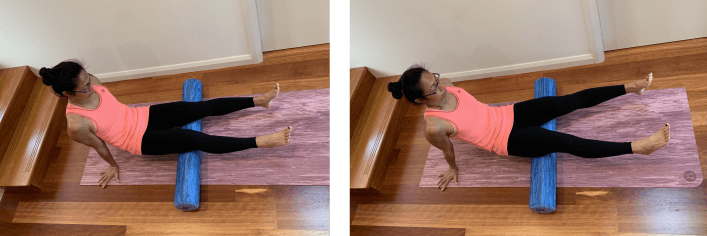
Spans
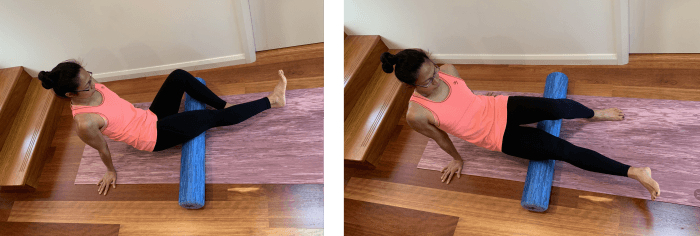
When you locate a trigger point, move side to side across the area rather than along it. This lateral movement can release tension that rolling alone doesn't fully address.
Stretching
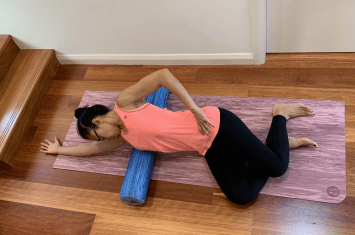
Find a trigger point, hold steady pressure on it and simultaneously stretch the muscle to its full range of motion. This combination of compression and stretch is particularly effective for improving flexibility and circulation in tight areas.
Which foam roller should you choose?
Foam rollers come in different shapes, sizes, lengths and densities. The main options are:
- Smooth foam rollers: good for beginners. Gentler and easier to use. Standard density works well for most people starting out
- Textured or grid rollers: firmer with raised patterns that create deeper pressure on specific points. More intense and more targeted than smooth rollers
- Hard plastic rollers with foam: the firmest option. Best for experienced users who need deep tissue work
- Short rollers: more portable and convenient for travel or targeted single-muscle work. Less useful for large muscle groups like the back
Start with a medium density smooth roller if you're new to foam rolling. Progress to a firmer or textured roller once you're comfortable with the technique and want deeper pressure.
Things to pay attention to
A foam roller and other tools alike are inexpensive and relatively easy to use. That said, you should pay attention to a couple of things.
Firstly, pay attention to your body. If you are foam rolling on an area that doesn’t feel right or there is pain that gets worse, best to see your physician or physiotherapist to find out if there is an underlying problem.
Secondly, avoid foam rolling over sensitive areas or joints like the neck, lower back, and knee joint.
For more information on foam rolling or self-myofascial release, please visit TriggerPoint →
The Ready State: mobility exercises and tutorials →
Health should feel like your best life, not a break from it.
Marco ☕
 |
About Me I'm Marco Asnicar, personal trainer, nutrition coach and founder of Vitality Marco. I didn't discover the Mediterranean method. I grew up living it, shaped by Italian roots, real food and movement as a natural part of daily life. I coach men and women aged 35 to 55 to do the same. No restriction. No fads. No giving up the life you love. Just a way of eating and living that genuinely feels good and gets better every year. Want to know more about my story and approach? Read my full About Me page → |