Daily Nutrition
You Don't Need a Nutrition Degree. You Just Need to Understand the Basics.
Are you confused by all the conflicting nutrition advice out there? You're not alone. The internet is full of people telling you to avoid carbs, load up on fat, skip breakfast, eat six times a day. It's exhausting.
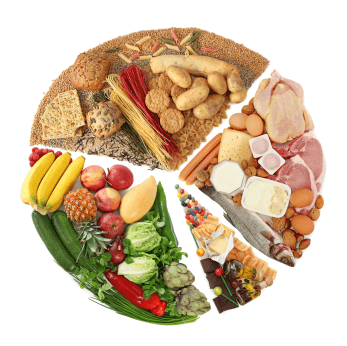
Here's the truth: good daily nutrition doesn't need to be complicated. Once you understand the basics, it becomes second nature. I've been eating well my whole life without obsessing over it, and the foundation has always been the same: understand what your body needs, eat mostly whole foods, and stay consistent.
I believe optimal health begins with a solid understanding of your daily nutrition. What goes into your body determines how you feel, how you perform, and how long you stay well. Food can cause problems or it can protect your health. That's a powerful thing to understand.
Nutrition means to nourish. To nourish means to keep alive and well by food. A good daily nutrition plan should do three things simultaneously.
What a good daily nutrition plan should do
Improve your body composition
Whether you want to lose body fat, build muscle, or simply feel more confident in your body, what you eat every day is the primary driver of that outcome.
Improve your health
Not just how you look, but how you feel. Energy levels, digestion, inflammation, immunity. Nutrition is the foundation of all of it.
Improve your quality of life
Better energy, better performance in your training, better longevity. My diet is one of the main reasons I'm in better shape in my 50s than I was at 30. It's not complicated. It just requires consistency with the right information.
The good news is that you don't need to be a nutritional expert to eat well. You just need to understand what is genuinely nourishing and what to limit. Once you understand that, better decisions become automatic.
Daily nutrition can be grouped into two categories: macronutrients and micronutrients.
Macronutrients
Proteins, carbohydrates, and fats are called macronutrients because we need them in large amounts daily. Our body also needs water and energy from these three to function properly. That energy is measured in calories.
Protein
Your body uses protein to build and repair muscle, bone, tissue, skin, organs, and blood. Getting adequate protein every day is non-negotiable if you want to stay lean, strong, and healthy as you age.
The recommended range is anywhere from 0.8 grams to 2.0 grams or more per kilogram of body weight, depending on your activity level and goals. For a sedentary healthy adult, 0.8 grams per kilogram covers basic daily requirements. That's about 56 grams per day for a 70 kg person. But if you're training regularly, you'll need more.
My own preference is 1.2 to 1.6 grams per kilogram of lean body weight because of my training volume. I get it from fish, chicken, eggs, legumes, yoghurt, and a pea protein supplement when needed.
Protein can be found in poultry, fish, seafood, eggs, dairy, vegetables, soy, legumes, nuts, and seeds.
Daily protein intake: Benefits for muscle growth, weight loss and health →
Carbohydrates
Carbohydrates are your body's primary source of energy. When you eat carbohydrates, your body breaks them down into glucose. Glucose is stored in the liver and muscles as glycogen and provides essential fuel for your brain and nervous system.
Carbohydrates are essential in your daily diet so that protein isn't used up for energy when it's needed for repair and muscle building. I've eaten a high-carb Mediterranean diet my whole life and I'm in the best shape I've ever been. Don't let anyone tell you carbs are the enemy.
Carbohydrate needs do vary from person to person. An active individual or competitive athlete will do best with a higher carbohydrate intake. A sedentary person will need less. But for most people who move regularly, carbs are your friend.
Carbohydrates are not all created equal and fall into two categories:
Simple carbohydrates: Impact of sugars and refined grains →
Complex carbohydrates: Whole grains, fibre and lasting energy →
Carbohydrates and weight loss: The truth about carbs →

Fats
Fat is an essential macronutrient that often gets unfairly demonised. Your body needs fat to make and balance hormones, form cell membranes, build your brain and nervous system, and transport fat-soluble vitamins A, D, E, and K.
There are two broad types of dietary fat: saturated and unsaturated. Unsaturated fats break down further into monounsaturated and polyunsaturated. A better way to think about it is processed versus unprocessed. The fats in whole foods like olive oil, avocado, eggs, fish, and nuts are what your body is designed to thrive on. The fats to genuinely avoid are trans fats and hydrogenated fats found in processed and packaged foods.
Humans evolved eating a diet with an equally balanced mix of saturated, monounsaturated, and polyunsaturated fats from whole food sources. That balance is what I aim for.
Dietary fat: The truth about fats for health and weight management →

Micronutrients
A healthy diet must also include the right amounts of micronutrients. These are vitamins, minerals, and compounds like phytonutrients. They're needed in smaller quantities than macros but they are just as essential. They work at the cellular level, which is where optimal health actually begins.
Vitamins
Vitamins are natural substances required in small amounts that the body cannot produce in sufficient quantities on its own. They assist in regulating metabolism, releasing energy from food, promoting growth, and maintaining health.
There are two groups: fat-soluble vitamins (A, D, E, and K), which require fats to be absorbed and are stored in the liver; and water-soluble vitamins (the B vitamins and vitamin C), which need to be replenished regularly because any excess is excreted in the urine.
Minerals
Minerals are equally important and must come entirely from food, as the body produces none. They're vital for body structure, like calcium for teeth and bones, and for regulating body fluids, like sodium and potassium for muscle contraction.
Major minerals like calcium, magnesium, potassium, and sodium are needed in larger amounts. Trace minerals like iron, zinc, and selenium are needed in smaller amounts but are no less important.

Other essential nutrients
Water
Water is one of the most overlooked essential nutrients. It makes up around 60 to 75 per cent of our body weight. You can survive several weeks without food, but only a few days without water. Most people are chronically under-hydrated without realising it.
The benefits of drinking water daily →
Fibre
Fibre is found only in plant foods and is technically a type of complex carbohydrate from the cell wall of plants. It cannot be digested or absorbed into the bloodstream, so it is not classified as a nutrient. But don't let that fool you. Fibre is absolutely essential for gut health, cholesterol management, blood sugar regulation, and long-term disease prevention.
Benefits of fibre: Why a high-fibre diet matters →
Phytonutrients
Phytonutrients are naturally occurring compounds found in plant foods that protect the plant from disease, UV rays, and fungus. They also form the plant's immune system. And here's the remarkable thing: those same compounds are incredibly beneficial for human health too. They give fruits and vegetables their colours, and the more colour on your plate, the more phytonutrient protection you're getting.
Phytonutrients: The hidden power of plant foods →
For more on nutrition, I recommend Precision Nutrition's work.
Precision Nutrition: 5 Universal principles of good nutrition, according to science →
Health should feel like your best life, not a break from it.
Marco ☕
 |
About Me I'm Marco Asnicar, personal trainer, nutrition coach and founder of Vitality Marco. I didn't discover the Mediterranean method. I grew up living it, shaped by Italian roots, real food and movement as a natural part of daily life. I coach men and women aged 35 to 55 to do the same. No restriction. No fads. No giving up the life you love. Just a way of eating and living that genuinely feels good and gets better every year. Want to know more about my story and approach? Read my full About Me page → |