Primal Movement Patterns
Train Your Body the Way It Was Designed to Move
If you want to get the most out of your training, stop thinking about individual muscles and start thinking about movements. That shift is the foundation of functional fitness and it's what the primal movement patterns are all about.
The concept was developed by Paul Chek, founder of the CHEK Institute, and is called Primal Pattern movement training. The idea is simple. Instead of training muscles in isolation, you train the whole body as a unit by practising the fundamental movement patterns humans use every day.
Getting into your car. Bending over to pick something up. Putting something on a shelf overhead. Walking up stairs. Carrying your child. These are all primal movements. Train them well and you move better, feel better and stay functional for life.
The seven primal movement patterns
1. Squat
Both feet on the ground forming your base of support. Bend at the hips and knees while keeping your chest up and maintaining a straight back. The classic example is sitting down and standing up from a chair. I use that exact cue when coaching clients into a proper squat.
The squat uses your leg and core muscles to keep you upright.
Squat exercises
- Air squat
- Goblet squat
- Barbell back squat
- Barbell front squat
- Split squat
- Jump squat
- Pistol squat
2. Lunge
A single leg movement where one leg moves forward or backward while the other stays stationary. Used every time you walk up stairs. Challenges balance and flexibility alongside leg strength.
Lunge exercises
- Forward lunge
- Backward lunge
- Side lunge
- Bulgarian lunge
- Walking lunge (my personal favourite)
- Step-ups
3. Pull
Pulling weight toward your body or pulling your body toward an object, either vertically or horizontally. A pull-up is a vertical pull. A row is a horizontal pull. Uses your back, shoulder and bicep muscles.
Pull exercises
- Pull-ups
- Inverted row
- Barbell row
- Dumbbell row
- Single-arm dumbbell row
- Suspension trainer row (TRX or rings)
4. Push
The opposite of a pull. Pushing weight away from your body or moving your body away from an object, either vertically or horizontally. Uses your chest, shoulder and tricep muscles.
Push exercises
- Push-up and variations
- Barbell bench press
- Dumbbell chest press
- Barbell shoulder press
- Dumbbell shoulder press
- Pike shoulder press
- Dips
5. Bend
Initiated by hinging from the hips with your torso moving forward. Used when picking things up off the ground. For lighter items we naturally use a rounded back. For heavier items we use our hips, glutes and legs while maintaining a straight back to minimise injury risk.
Bend exercises
- Kettlebell or dumbbell deadlift
- Barbell deadlift
- Single leg deadlift
- Kettlebell swing
- Hip bridge
- Hip thrusts
6. Twist
Your body moves in three planes of motion: forward and backward (sagittal), side to side (frontal) and rotational (transverse). Most gym exercises only use the first two planes. To make training truly functional, you need to incorporate rotation and anti-rotation movements. These improve hip mobility and core strength significantly.
Twist exercises
- Russian twist (rotation)
- Resistance band or cable wood chop (rotation)
- Palloff press (anti-rotation)
- Medicine ball throws (rotation)
- Dumbbell rotational punches (rotation)
- Plank with shoulder tap (anti-rotation)
7. Gait
Walking, running or sprinting. Movements that propel the body forward. When you train all six other primal movements consistently, your gait improves naturally. You move with more ease and less injury risk.
Gait exercises
- Walking
- Running
- Sprinting
- Jumping
- Skipping
- Cycling
How to build your own workout using primal movement patterns
Want a workout routine that trains the whole body as a unit? One that's time-efficient, effective and actually produces results? Here's how to build one.
- Choose one exercise from each of the seven primal movement patterns above
- Use a gait exercise as your warm-up and as a finisher at the end with slightly more intensity
- Do the most physically demanding exercises first, typically legs or pull-ups
- If you're new to training, do each exercise once through for 10 repetitions
- Progress by adding multiple sets as you get stronger and fitter. Three sets of 10 is a solid target
- Rest between sets and exercises as needed. Listen to your body
Example workout routine
Warm-up
5 to 10 minutes of walking
1 minute of star jumps
Workout
- Goblet squat - 3 sets x 10 reps
- Walking lunge - 3 x 10 steps each leg
- Pull-ups or inverted row - 3 x 10
- Push-ups - 3 x 10
- Kettlebell or dumbbell deadlift - 3 x 10
- Russian twist - 3 x 10
- Skip rope - 3 x 30 seconds
This full-body workout hits all seven primal movement patterns, takes about 40 minutes and builds real functional strength. Adjust the exercises and repetitions to suit your current fitness level and goals.
Health should feel like your best life, not a break from it.
Marco ☕
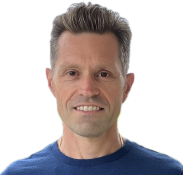 |
About Me I'm Marco Asnicar, personal trainer, nutrition coach and founder of Vitality Marco. I didn't discover the Mediterranean method. I grew up living it, shaped by Italian roots, real food and movement as a natural part of daily life. I coach men and women aged 35 to 55 to do the same. No restriction. No fads. No giving up the life you love. Just a way of eating and living that genuinely feels good and gets better every year. Want to know more about my story and approach? Read my full About Me page → |