Home Gym Bench
The Piece of Equipment That Multiplies Your Exercise Options
A gym bench, also called a weight bench or fitness bench, can be an integral part of your home gym. It's useful for bodyweight exercises, dumbbell exercises and barbell work in a power rack. It also opens up exercise variations that aren't possible standing, such as incline and decline pressing angles, seated movements and lying exercises.
Some benches come with optional attachments: leg extensions, leg curls, preacher curl pads and more. These add further variety without requiring additional equipment.
Types of home gym benches
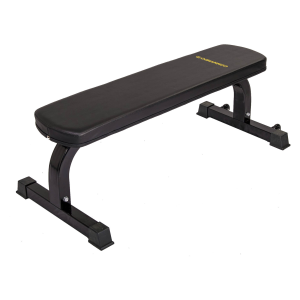
Flat bench
The most basic option. Useful for a range of exercises but limited in versatility because it can't be adjusted to different angles. A good starting point if budget is the primary concern.
Adjustable bench
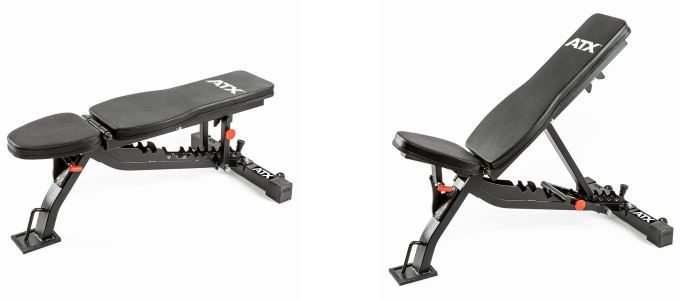
The adjustable bench can be set from flat to incline to decline, and to an upright seated position. If you want to do pressing exercises at different angles, perform seated exercises and have genuine versatility from a single piece of equipment, an adjustable bench is the right choice. It's the one I recommend and the one we use.
What to look for in a home gym bench
Heavy-duty construction
A quality bench is strong, stable and considerably heavier than budget options. An adjustable bench can weigh up to 30kg or more. That weight is an indication of the steel quality and structural integrity. Don't buy a bench that flexes or wobbles under load.
Weight capacity
Choose a bench rated to hold at least 230kg but ideally 450kg or more. Remember it has to carry your bodyweight, the weight you're lifting and the force generated during the movement. More capacity than you currently need means the bench grows with you.
Size and fit
The bench needs to be the right length, height and width for your body. I prefer a bench that isn't too wide because a wide bench interferes with the natural arc of arm movement during pressing exercises. The width should allow your arms to move freely at the bottom of a press without restriction.
Stability
Two things determine bench stability: the leg geometry and the foam density. I want wide legs or a broad base at the lifting end to prevent movement under load. I also prefer dense foam of at least 5cm because it makes a real difference to stability and support during exercises.
Adjustable angles
Ensure the bench adjusts through a wide range of angles: flat, multiple incline positions and upright. Ideally the seat section also adjusts to prevent sliding during incline work. A bench that only adjusts the back pad is less useful than one where the seat also angles accordingly.
Wheels
Choose a bench with wheels at one end or a wheel kit attachment. Being able to tip the bench and roll it rather than dragging or carrying it makes repositioning easy. Especially important in a garage gym where space needs to flex between exercises.
Health should feel like your best life, not a break from it.
Marco ☕
 |
About Me I'm Marco Asnicar, personal trainer, nutrition coach and founder of Vitality Marco. I didn't discover the Mediterranean method. I grew up living it, shaped by Italian roots, real food and movement as a natural part of daily life. I coach men and women aged 35 to 55 to do the same. No restriction. No fads. No giving up the life you love. Just a way of eating and living that genuinely feels good and gets better every year. Want to know more about my story and approach? Read my full About Me page → |